
What Is an Industrial Floor Scrubber and How Does It Work?

An Industrial Floor Scrubber is a powered cleaning machine designed for large, hard-surface areas. It removes dirt, oil residue, dust, and tracked-in debris more efficiently than ordinary mopping. These machines appear in warehouses, factories, shopping centers, airports, and commercial kitchens. Their size and design vary widely. Some models are walk-behind units, while others are ride-on machines. The right choice depends on floor type, traffic, contamination, and available cleaning time.

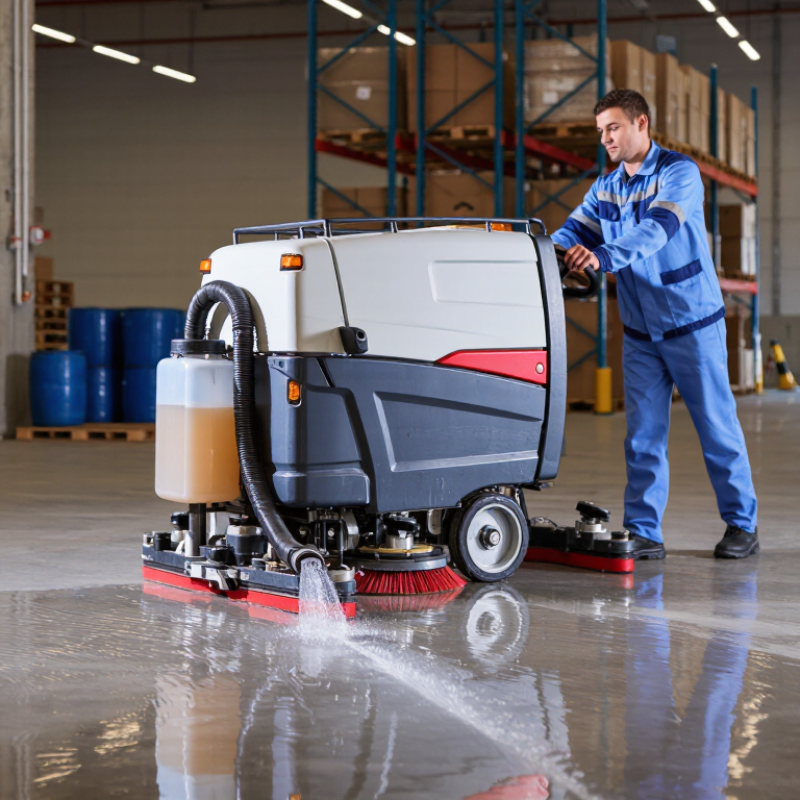
The machine usually dispenses water and cleaning solution onto the floor. Rotating brushes or abrasive pads then loosen embedded soil. A rear squeegee collects the dirty liquid, while a vacuum motor pulls it into a recovery tank. This creates a visibly cleaner and safer surface with fewer wet patches. Skilled operators adjust brush pressure, solution flow, and travel speed for consistent results. Too much water can delay drying. Too little may leave soil behind.

Performance is not automatic. It depends on maintenance, operator training, and suitable chemicals. A neglected squeegee can leave streaks. Worn brushes may reduce cleaning quality. These small issues are easy to overlook. Manufacturers provide operating instructions, but real facilities often require practical adjustments. Floor condition, temperature, and daily traffic can change the outcome. Understanding how an Industrial Floor Scrubber works helps facility teams choose equipment wisely, control operating costs, and build a more reliable cleaning routine. Careful observation still matters.
What Is an Industrial Floor Scrubber and How Does It Work?

Industrial Floor Scrubbers: Types, Components, and ISSA 612 Productivity Data

An industrial floor scrubber removes soil from large, hard floors more consistently than manual mopping. It applies cleaning solution, agitates the surface, and recovers dirty water in one pass. Common types include walk-behind, ride-on, and autonomous machines. Walk-behind units suit narrow aisles and crowded workshops. Ride-on models cover broad warehouses faster. Autonomous units can repeat mapped routes, but they still need supervision.

Key components include a solution tank, dispensing system, brush or pad deck, squeegee, vacuum motor, and recovery tank. The brush loosens oil film, dust, and embedded grit. The squeegee gathers the slurry. Then, the vacuum motor pulls it into the recovery tank. A blocked squeegee can leave gray trails behind. Small maintenance details matter.

ISSA 612 productivity data helps estimate labor time and machine output. It is a planning benchmark, not a guaranteed production rate. Actual results depend on floor condition, aisle congestion, operator skill, solution changes, and charging time. A large ride-on scrubber may appear highly productive on an empty concrete floor. Real facilities often lose time around racks, drains, doors, and safety barriers. I have seen estimates fail because travel distance was ignored. That is an important weakness to examine. Measure usable cleaning time, not only the machine’s advertised width and speed. Record square feet cleaned per labor hour, water use, recovery performance, and rework. Productivity improves when data reflects the dirty floor people actually clean.

Step 1—Pre-Sweep and Apply Solution: Preparing the Floor for Scrubbing

An industrial floor scrubber combines water, cleaning solution, rotating brushes, and suction to remove embedded soil. Before the machine starts, the floor needs careful preparation. This opening step controls the quality of the entire cleaning process.

Begin by removing pallets, cables, loose packaging, and visible debris. Sweep or vacuum dust from corners, expansion joints, and beneath equipment edges. Small stones can scratch coated floors or become trapped under the brushes. They can also block the recovery system. Check the surface for oil, dried mud, and chemical residue. These heavier deposits may need a suitable spot treatment before mechanical scrubbing.

Next, mix the cleaning solution according to the product instructions and the floor material. Too much chemical can leave a sticky film, while too little may spread grease. Apply enough solution to soften the soil without flooding the area. Work in manageable sections. This keeps the floor wet, but not dangerously slippery. I have seen operators rush this stage and blame the scrubber for poor results. The machine was not the real problem. Even experienced crews sometimes overlook corners or apply solution unevenly. A brief inspection after application can reveal dry patches, missed debris, or damaged flooring. That pause improves safety and makes the later scrubbing pass more consistent.

Step 2—Agitate Soil: How Brushes and Pads Remove Contamination

An industrial floor scrubber removes contamination through controlled agitation. After solution reaches the floor, rotating brushes or abrasive pads loosen soil from the surface. Their movement breaks the bond between grease, dust, and embedded particles. Water alone often cannot do this effectively.

Brushes suit textured concrete because their bristles enter small grooves. Pads usually work better on smoother floors, where they create consistent contact. Pressure matters. Too little pressure leaves residue behind, while excessive pressure can wear the floor or overload the machine. Speed also changes results. A slower pass usually gives the brush more time to work. Watch the dirty solution closely. It often reveals whether the process is working.

Tips: Match the brush stiffness to the floor. Test a small area first. Keep the pad flat. Replace worn pads promptly. A simple inspection can prevent uneven cleaning.

In practice, operators should adjust pressure, speed, and solution flow together. One change can affect the others. For example, heavy grease may need slower movement, but extra pressure is not always the answer. It can smear contamination across the surface. I have found that rushed passes create clean-looking stripes and dirty edges. That result is easy to miss under warehouse lighting. Check corners, joints, and traffic lanes after the first pass. The method may need refining. Floors vary, even within one facility.

What Is an Industrial Floor Scrubber and How Does It Work? - Step 2—Agitate Soil: How Brushes and Pads Remove Contamination

Agitation Tool Typical Material Common Operating Speed Typical Contact Pressure Best Suited Contamination How It Removes Soil Surface Compatibility Important Limitation
Soft nylon brush Nylon bristles Approximately 150–300 rpm Low to medium Light dust, loose soil, and routine daily residue Flexible bristles sweep through surface texture and suspend loose particles in cleaning solution. Sealed concrete, vinyl, epoxy, tile, and other durable floors May not provide enough mechanical action for hardened or heavily compacted soil.
Medium nylon brush Medium-stiff nylon bristles Approximately 150–300 rpm Medium Tracked-in dirt, moderate grease, and textured floor contamination Bristles apply repeated shear and friction while reaching shallow joints and irregularities. Concrete, quarry tile, safety flooring, and textured resilient surfaces Excessive pressure or abrasive soil can dull or wear sensitive finishes.
Grit-impregnated brush Nylon bristles with abrasive mineral particles Approximately 150–300 rpm Medium to high Embedded soil, worn coatings, and heavily textured concrete Abrasive bristle tips cut into deposits and produce stronger mechanical scouring than standard nylon. Unsealed or heavily textured concrete and other abrasion-resistant floors Can scratch, haze, or remove finish from delicate, polished, or coated surfaces.
White polishing pad Non-abrasive polyester or blended fiber Approximately 150–600 rpm Low Fine dust and light surface marks Provides light friction and absorbs or collects fine particles without aggressive cutting. Finished resilient flooring and polished surfaces Ineffective against thick grease, heavy deposits, and deep grout contamination.
Red spray-cleaning pad Lightly abrasive synthetic fiber Approximately 150–600 rpm Low to medium Light-to-moderate soil, scuff marks, and routine spray cleaning Uniform surface contact creates friction that loosens soil while the solution carries it away. Sealed resilient floors and smooth hard surfaces Requires sufficient solution and regular pad replacement to maintain consistent results.
Green scrubbing pad Medium-abrasive synthetic fiber Approximately 150–600 rpm Medium Ground-in dirt, scuffing, and moderate maintenance cleaning More abrasive fibers increase shear stress and break the bond between soil and floor coating. Durable sealed floors and coated hard surfaces May wear floor finish if used too frequently or with excessive down pressure.
Black stripping pad Highly abrasive synthetic fiber Approximately 150–300 rpm Medium to high Old finish, heavy buildup, and strongly bonded contamination Aggressive fibers abrade and remove coatings or deposits when combined with suitable stripping solution. Hard, compatible floors undergoing restorative maintenance Not suitable for routine cleaning or delicate finishes; can permanently scratch some surfaces.
Microfiber pad Fine split microfiber Approximately 150–300 rpm Low to medium Fine dust, light oils, and routine low-moisture soil Fine fibers increase contact area and trap small particles through mechanical capture. Smooth sealed floors and lightly textured surfaces Can load with grease or abrasive particles and must be cleaned or replaced regularly.
Operating note: Actual brush or pad speed, contact pressure, and cleaning performance vary by machine design, tool diameter, floor condition, soil type, solution concentration, and operator settings. Mechanical agitation is most effective when the cleaning solution has enough dwell time to soften and suspend the contamination before recovery.

Step 3—Recover Wastewater: Squeegees, Vacuum Motors, and Dry Floors

After scrubbing, an industrial floor scrubber must recover dirty water before tires, shoes, or forklifts cross the surface. Rear squeegees collect the liquid into a narrow path. A vacuum motor then creates airflow, pulling wastewater through the recovery hose and into the tank. The floor should look clean and nearly dry within seconds.

Small details matter. The squeegee blade needs firm, even contact with the floor. Cracked edges, incorrect pressure, or excessive speed can leave thin water trails. Field technicians often find that operators drive too quickly near corners. They also miss the final overlap. That is where puddles remain.

OSHA’s Walking-Working Surfaces guidance treats wet floors as a serious slip hazard. The U.S. Bureau of Labor Statistics recorded 885 fatal work injuries involving falls, slips, and trips in 2023. Wastewater recovery is therefore a safety control, not merely a finishing step. Vacuum performance also depends on sealed hoses, a clean float shutoff, and an unclogged recovery filter. When the tank reaches capacity, suction can weaken without an obvious warning. Check it.

Recovery is rarely perfect. Rough concrete, floor joints, and damaged blades can defeat strong vacuum motors. A practical operator slows down, adjusts pressure, and inspects the aisle from a low angle. Dry-looking is not always dry.

Industrial Floor Scrubber Wastewater Recovery

Recovery tanks are typically sized slightly larger than solution tanks to reduce overflow risk during cleaning. After the brushes loosen soil, the rear squeegee gathers the wastewater and the vacuum motor draws it into the recovery tank, leaving the floor substantially drier.

Values show representative nominal tank capacities commonly specified for industrial scrubbers; actual specifications vary by machine class and application.

Step 4—Measure Output: 20,000–50,000 sq ft/h in ISSA 612 Benchmarks

An industrial floor scrubber combines solution, agitation, and water recovery in one moving machine. It releases measured detergent, scrubs the surface with rotating brushes or pads, then lifts dirty water through a vacuum system. The operator guides it across concrete, warehouse aisles, or production floors. Clean floors depend on more than machine size.

Step 4 is measuring output. Common ISSA 612 benchmarks place industrial scrubber productivity around 20,000–50,000 square feet per hour. This range describes practical cleaning capacity, not a guaranteed result. A wide, open floor may approach the upper figure. Tight aisles, safety stops, heavy soil, and repeated passes can reduce output sharply.

Measure it with a simple timed trial. Record the cleaned area, travel time, solution refills, recovery-tank stops, and turning delays. For example, cleaning 30,000 square feet in one hour gives a measured rate of 30,000 square feet per hour. Watch the edges. They often require separate work and can distort the result.

My first calculation would likely miss something. A machine may appear fast during straight runs but lose time at loading bays and doorway transitions. Floor moisture also matters. If recovery is weak, the operator may slow down or repeat passes. A reliable report should show both theoretical coverage and actual productive output, with floor conditions noted beside each figure.