Top 10 Types of Plasma Cutting Machines to Buy?
Choosing among the top 10 types of plasma cutting machines is not simply a price comparison. It is a decision about material thickness, cutting accuracy, workspace, power supply, and long-term maintenance. A compact handheld unit may suit repair work, while a CNC plasma table can produce repeatable brackets, panels, and steel frames. High-definition systems offer cleaner edges, but they usually demand greater investment and more careful setup.
Jim Colt, a respected plasma-cutting educator and former Hypertherm technical specialist, has explained: “Plasma cutting is a process, not just a machine.” That observation matters. A powerful plasma cutting machine cannot compensate for poor grounding, unsuitable compressed air, or an incorrect amperage setting. Moisture in the air line can leave rough edges and shorten consumable life. Small details become expensive quickly.
This guide examines ten practical machine categories, including handheld, CNC, air plasma, high-definition, multi-process, and portable models. Each type serves a different working environment. Some prioritize mobility. Others focus on speed, automation, or fine tolerances. The “best” option is rarely universal.
That is the difficult part.
Buyers may also overlook noise, duty cycle, torch access, software learning curves, and replacement parts. I have seen specifications appear impressive until real cutting begins. Therefore, the comparisons consider actual workshop use, not only advertised amperage. The goal is a clearer purchase decision, though no guide can replace testing a machine on your own metal, power supply, and production schedule.
Classify 10 Plasma Cutter Types by Power, Automation, and Cutting Method
Plasma cutting machines differ by power, automation, and cutting method. Handheld air plasma cutters suit repair work and thin sheet metal. Inverter plasma cutters reduce weight and often deliver steadier arc control. High-power industrial plasma systems handle thick plate and long production runs. High-definition plasma machines improve edge quality through tighter gas and arc control. According to Grand View Research’s 2024 plasma cutting machine analysis, automation and precision remain major market growth factors.
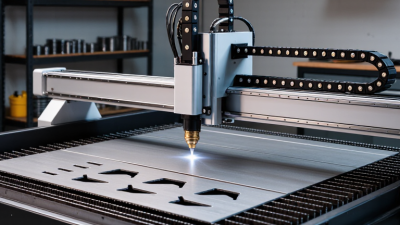
CNC table cutters guide the torch across programmed flat sheets. Mechanized gantry cutters support larger plates and repeated fabrication. Robotic plasma cutters follow multi-axis paths around frames and irregular parts. Oxygen plasma systems perform well on mild steel, while nitrogen or air plasma supports other metals. Underwater plasma tables reduce smoke, glare, and heat distortion. Bevel plasma cutters angle the torch for weld-preparation edges. These ten types overlap, and that classification is not perfectly clean.
Tips: Check the material, thickness, duty cycle, kerf width, and available power before buying. A 60-amp machine may cut 20-millimeter steel, but production speed can fall sharply. Read the manufacturer’s test chart, then verify it with your own plate samples. MarketsandMarkets identifies automated cutting as a key industry direction, yet automation cannot correct poor grounding, wet air, or incorrect torch height. I have seen impressive cuts fail during welding because the edge was slightly beveled. Choose repeatability, not only maximum amperage.
Handheld Air and Inverter Cutters: 20–60 A and 6–25 mm Steel
Top 10 Types of Plasma Cutting Machines to Buy?
For light workshop work, handheld air plasma cutters from 20 to 60 A cover most practical needs.
A 20 A unit suits thin sheet, brackets, and repair panels. Machines rated at 25, 30, or 40 A offer better control for 3–12 mm steel. They are usually easier to carry. A 50 or 60 A cutter handles heavier plate, often approaching 20–25 mm severance capacity.
Clean cutting capacity is lower.
Do not confuse a rough severance cut with a production-quality edge.
The ten useful categories include compact 20 A, 25 A, 30 A, 40 A, 50 A, and 60 A cutters, plus inverter, built-in compressor, external-air, and pilot-arc models.
Inverter technology reduces weight and improves energy efficiency, but stable input power still matters.
Built-in compressors improve portability, though they can be noisy and limited during long cuts. External-air machines need a dry, filtered supply. Moisture quickly damages consumables.
I once judged a cutter by peak amperage alone, and that was too optimistic.
Duty cycle, torch ergonomics, electrode life, and available replacement parts matter more than a large number on the panel.
For 6–25 mm steel, check the manufacturer’s rated clean-cut thickness, not only maximum severance.
Keep the work clamp close to the cutting area. Wear a proper face shield, gloves, hearing protection, and flame-resistant clothing. Straight cuts improve with a guide, especially above 40 A.
Small mistakes remain visible.
High-Frequency, Portable, and CNC Cutters: 40–200 A Production Needs
Choosing among the top 10 types of plasma cutting machines depends on material, workflow, and required amperage. High-frequency plasma cutters provide fast arc starting and clean ignition, but they need careful grounding and controlled installation. Portable cutters, often rated from 40 to 80 A, suit repair work, thin steel, and field fabrication. They are easy to carry, though their duty cycle may limit continuous production.
For workshop output, 100–200 A machines offer deeper cutting capacity and longer operating periods. CNC plasma cutters add repeatability, especially for brackets, panels, and repeated steel profiles. However, amperage alone can mislead buyers. A 200 A unit may waste energy when cutting thin sheet, while a smaller machine can produce a cleaner edge at the correct speed. Check rated duty cycle, pierce capacity, torch cooling, air filtration, and replacement consumables. Cut quality depends on the whole system.
Tips: Test the machine on your actual steel before buying. Measure bevel, dross, kerf width, and cycle time. Keep dry, filtered air available. Poor air causes unstable arcs and shortens consumable life. Confirm the CNC table supports the machine’s torch height control and electrical requirements. One detail is easy to overlook: louder power is not always better production. Recheck your expected thickness range; real jobs often differ from the original estimate.
Underwater and Fine-Plasma Cutters: Compare Duty Cycle, Gas, and Kerf
Among the ten plasma cutter types, underwater and fine-plasma systems deserve closer comparison. Underwater cutting usually places the workpiece beneath water, while the torch still uses compressed gas. Water captures much of the smoke, glare, and heat. However, it can hide the arc and complicate dimensional inspection.
Duty cycle is a practical buying filter. IEC 60974-1:2021 evaluates duty cycle over a ten-minute period, commonly at a 40°C ambient temperature. A cutter rated at 60% can run for six minutes, then needs four minutes of cooling. Fine-plasma machines often use controlled oxygen or nitrogen for cleaner edges. Air is cheaper, but it may increase oxidation and consumable wear. Underwater cutting may require nitrogen, oxygen, or mixed shielding gases, depending on the metal and torch design.
Kerf shows the difference at the workbench. ISO 9013:2017 links thermal-cut quality with cut angle, roughness, and dimensional tolerance. Fine-plasma cuts may produce kerfs around 1.5–3 millimeters on suitable thin steel. Conventional systems may remove closer to 3–6 millimeters. These figures are not universal. Plate thickness, amperage, travel speed, and gas pressure change them quickly. I would not trust a catalog kerf figure alone. Test a corner and a small hole first. The comparison is imperfect, but a long-duty-cycle underwater cutter may outperform a finer machine when heat, fumes, and production volume matter more than tight tolerances.